
Common PET Preform Defects and How Quality Manufacturers Prevent Them
Haze, bubbles, crystallinity, short shots and neck defects can ruin bottles. Learn the common PET preform defects, their causes, and how good makers prevent them.
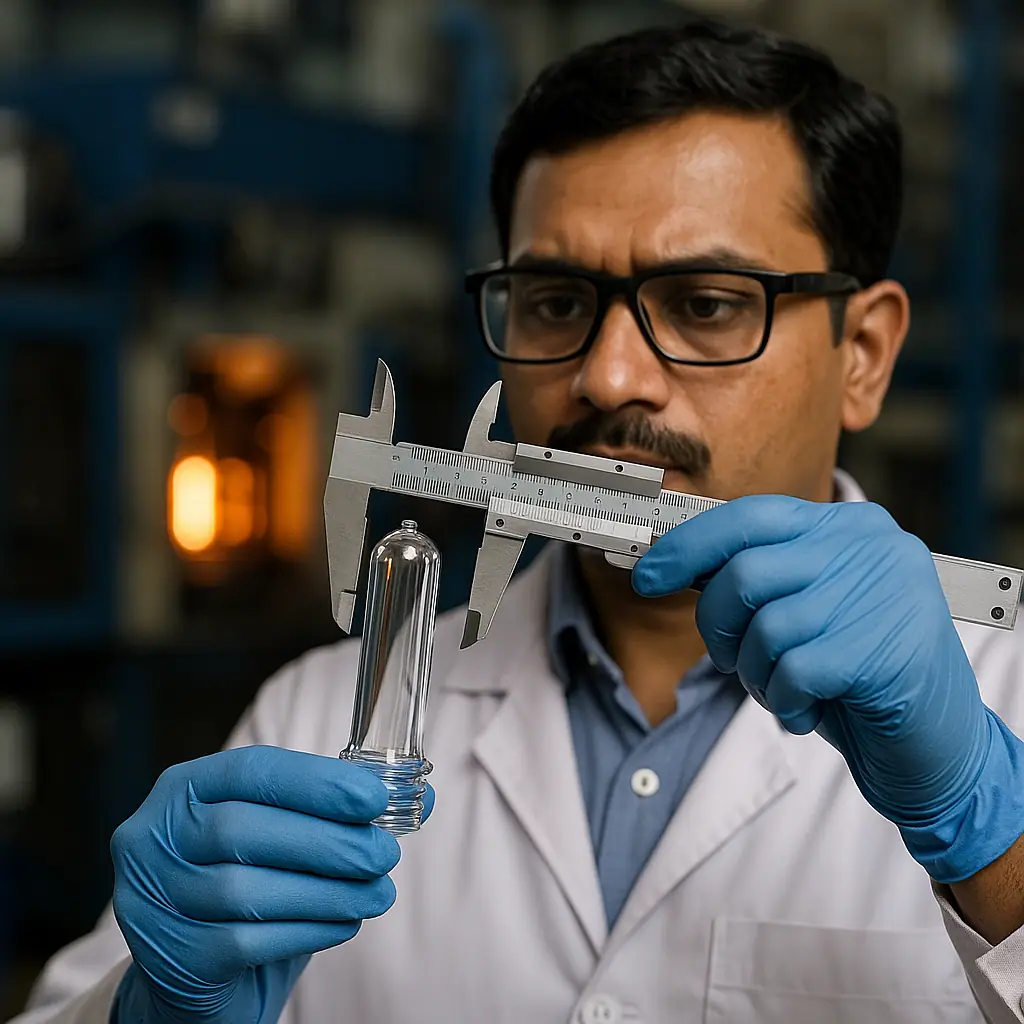
A defective preform is expensive in ways that don't show up on the invoice — it becomes a failed bottle, a line stoppage, a batch of rejects, or a customer complaint. Knowing the common PET preform defects helps buyers inspect what they receive and understand what separates a quality manufacturer from a cheap one. Here are the defects to know, their causes, and how good makers prevent them.
1. Haze and cloudiness
What it looks like: the preform (and the bottle it makes) is hazy or milky instead of crystal clear.
Common causes: moisture in the resin (inadequate drying), incorrect processing temperatures, or resin degradation.
How it's prevented: thorough drying of the hygroscopic PET resin before moulding, and correct melt temperatures. This is why drying discipline is central to good manufacturing.
2. Crystallinity (a white, cloudy neck or gate)
What it looks like: a pearly, white or opaque zone, often in the neck or at the gate, instead of clear PET.
Common causes: the PET was cooled too slowly through the temperature range where it crystallises, so it turned crystalline (white) rather than staying amorphous (clear). Overheating localised areas can also cause it.
How it's prevented: fast, even cooling — including proper post-mould cooling — so the material sets clear. A crystalline neck is a common reject because it also weakens the neck.
3. Bubbles and voids
What it looks like: trapped air bubbles or hollow voids inside the wall.
Common causes: moisture, trapped gas, or injection/processing issues.
How it's prevented: proper resin drying and controlled injection. Bubbles are a problem because they become weak points when the preform is blown.
4. Short shots (incomplete fill)
What it looks like: the preform is not fully formed — material didn't reach the end of the cavity.
Common causes: insufficient injection pressure or material, blocked flow, or temperature issues.
How it's prevented: correct machine settings and consistent shot control. Weight checks catch short shots quickly, because an incomplete preform is underweight.
5. Weight variation
What it looks like: preforms that should be identical vary in weight batch to batch or cavity to cavity.
Common causes: inconsistent process control, or worn/uneven multi-cavity tooling.
How it's prevented: tight process control and batch-level weight checks. Weight consistency is critical — it drives capping reliability and blowing consistency, and it's the foundation of any lightweighting.
6. Neck and thread defects
What it looks like: malformed threads, flash (excess material) on the neck, or out-of-spec neck dimensions.
Common causes: worn or misaligned neck tooling, or process issues.
How it's prevented: precise, well-maintained neck tooling and gauge checks on neck dimensions. Since the neck never changes during blowing, a neck defect means caps won't seal — a serious problem. See neck finishes.
7. Black specks and contamination
What it looks like: dark specks or foreign particles in the material.
Common causes: contaminated resin (a real risk with blended or reground material), or degraded material from the machine.
How it's prevented: using clean food-grade virgin resin and good material handling. This is one of the strongest arguments for virgin resin over blended scrap of unknown origin.
8. Stress cracking or brittleness
What it looks like: preforms or bottles that crack or shatter easily.
Common causes: resin degradation (often from moisture/hydrolysis during processing), or wrong resin grade for the application.
How it's prevented: proper drying, correct processing, and the right resin intrinsic viscosity (IV) for the product.
How quality manufacturers prevent defects
Notice the pattern — most defects trace back to a handful of disciplines:
- Food-grade virgin resin (prevents contamination and inconsistency)
- Thorough drying (prevents haze, bubbles, brittleness)
- Correct, even cooling (prevents crystallinity and deformation)
- Precise tooling (prevents neck and dimensional defects)
- Batch-level QC on weight, height, neck and IV (catches problems before they ship)
At ASTR PET, these checks run on every batch before it leaves the floor — because a defect caught in the factory saves a bottler from scrap and downtime.
What buyers can do
- Inspect incoming preforms for clarity, a clear (non-white) neck, and consistent weight.
- Ask about QC — what's checked, how often. See our supplier selection guide.
- Prefer food-grade virgin resin to avoid contamination-related defects.
The bottom line
Most preform defects — haze, crystallinity, bubbles, short shots, weight variation, neck defects, specks and brittleness — come down to resin quality, drying, cooling, tooling and QC discipline. A manufacturer that gets these right delivers preforms that blow into clean, strong, consistent bottles.
Want preforms made with batch-level QC you can rely on? Explore our preform range or talk to our team.