
Understanding Preform Neck Finishes: PCO 1881, PCO 1810, BPF and Alaska Explained
The neck finish decides which cap fits your bottle. Here's a plain-English guide to PCO 1881, PCO 1810, BPF, Alaska 3-Start and 46mm finishes.
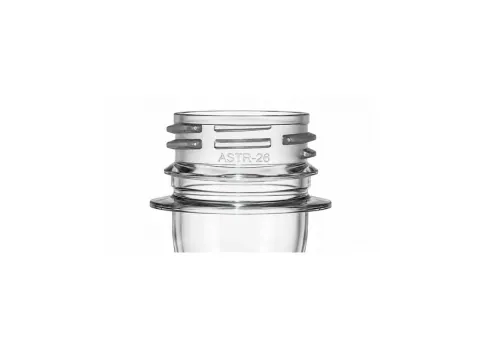
The neck finish is the most important detail on a preform that most buyers understand the least. It is the threaded top where the cap screws on — and unlike the body, it never changes shape during blowing. Whatever neck the preform has is the neck the finished bottle has. So the neck finish decides which caps fit, which capping heads work, and whether your whole line runs smoothly.
This guide explains the common neck finishes in plain terms.
What "neck finish" actually means
A neck finish is a standardised specification for the top of the bottle. It defines the thread design, diameter, height and sealing surface so that caps and preforms from different makers are interoperable. When someone says a preform is "28mm PCO 1881," they are naming its neck finish.
Two things follow from this:
- Your cap must match your neck finish. A PCO 1881 cap will not seal correctly on a PCO 1810 neck, even though both are "28mm."
- Changing neck finish means changing tooling downstream — caps, capping heads and sometimes the blowing setup. It is not a casual switch.
The common neck finishes
PCO 1881 (short neck)
The modern standard for carbonated soft drinks and water. PCO 1881 replaced the older PCO 1810 with a shorter neck, which uses less plastic in the neck region and lowers cost — a form of lightweighting at the top of the bottle. If you are starting fresh, PCO 1881 is usually the default for CSD and water.
At ASTR PET, our PCO 1881 preforms run from about 10 g (for 100–200 ml bottles) up to 19.6 g (for 300–600 ml), suited to juice, CSD and water.
PCO 1810 (long neck)
The older long-neck CSD standard. Still widely used, especially where existing caps and lines are built around it. It is taller than PCO 1881 and uses slightly more resin in the neck. Our PCO 1810 preforms range from about 21.5 g to 32 g and suit juice, CSD and phenyl.
If you already run PCO 1810 caps, there is no need to switch — but for a new line, PCO 1881 is the more material-efficient choice.
28mm 3-Start (Alaska)
A popular finish for packaged drinking water in India. The "3-Start" refers to its three-start thread, which allows fast, secure capping. Our Alaska 28mm 3-Start preforms cover the widest range — roughly 8.45 g for 200 ml bottles up to 34 g for 2-litre bottles — making it a versatile workhorse for water and non-CSD products.
BPF (28mm)
BPF is another 28mm finish common in the Indian packaged-water segment. Like Alaska, it is chosen for water and non-carbonated products. As with any finish, the deciding factor is what your caps and capping heads are built for — match the finish to your existing closure supply.
46mm (wide mouth)
A wide-mouth finish for jars and bulk containers. Our 46mm 3-Start preforms are heavy — around 74–80 g — and blow into containers up to 5 litres for oil, phenyl and bulk applications.
Neck finish vs neck size — don't confuse them
"28mm" is the neck size (roughly the diameter). PCO 1881, PCO 1810, BPF and Alaska are all different finishes that can share the same 28mm size. So "28mm" alone does not fully specify a neck — you need the finish name too. This is a frequent source of ordering mistakes.
How to choose the right neck finish
The order of decisions is usually:
- Start with your cap and capping line. The safest choice is the finish your closures and capping heads already support. Changing closures across a whole operation is expensive.
- Match it to your product. Carbonated drinks need a finish and closure rated for pressure (PCO 1881 or 1810). Still water has more freedom (Alaska, BPF). Bulk oil and jars use wide-mouth 46mm.
- Consider material efficiency. For a new CSD/water line, a short neck like PCO 1881 trims resin cost versus PCO 1810.
Rule of thumb: never pick a neck finish in isolation. Pick the finish your caps support, that suits your product's pressure and volume.
Quick reference
| Finish | Typical use | Notes |
|---|---|---|
| PCO 1881 | CSD, water | Modern short neck, less resin |
| PCO 1810 | CSD, juice, phenyl | Older long neck, still common |
| 28mm 3-Start (Alaska) | Packaged water, non-CSD | Very versatile weight range |
| BPF (28mm) | Packaged water | Match to your closures |
| 46mm 3-Start | Jars, bulk oil | Wide mouth, heavy preforms |
The bottom line
The neck finish is a fixed, standardised feature that dictates cap compatibility and line performance. Choose it first — driven by your closures and product — and the rest of your preform spec (weight, height, volume) follows.
Not sure which finish your bottles need? Share your cap or bottle sample and our team will match it. Explore our full preform range or message us.