
What Is rPET and Why Are Brands Switching to Recycled PET Preforms?
rPET is recycled PET made from used bottles. Learn what it is, why brands are adopting recycled PET preforms, and what to check before you switch.
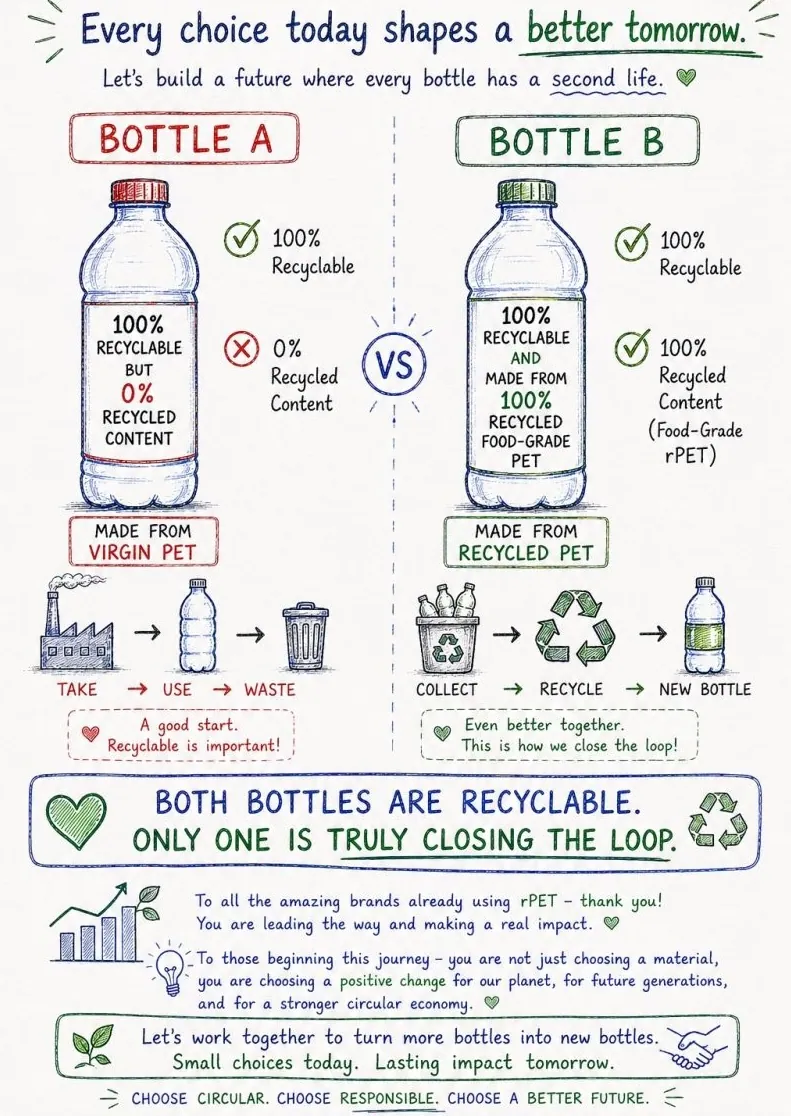
Walk down any beverage aisle and you will increasingly see the words "made with recycled plastic" on the label. Behind that claim is rPET — recycled PET — and it is quickly moving from a nice-to-have to a mainstream expectation. Here is what rPET is, why brands are switching, and what to weigh before you do.
What is rPET?
rPET stands for recycled polyethylene terephthalate. It is PET that has already been a product — usually used bottles — and has been collected, cleaned, and reprocessed into resin that can be moulded into new preforms and bottles.
Ordinary PET made fresh from raw materials is called virgin PET. rPET is chemically the same PET; the difference is its origin. Because PET can be recycled back into food-grade material, a used bottle can genuinely become a new bottle — the basis of bottle-to-bottle recycling.
How rPET is made
At a high level:
- Collection — used PET bottles are gathered through waste-collection systems.
- Sorting and cleaning — bottles are sorted by polymer and colour, then washed to remove labels, caps, food residue and contaminants.
- Flaking — the clean bottles are shredded into small flakes.
- Decontamination — for food-grade rPET, the flakes go through additional super-cleaning/decontamination steps to meet food-contact safety requirements.
- Repelletising — the flakes are processed back into resin pellets, ready to mould.
The extra decontamination step is what separates food-grade rPET from lower-grade recycled material used for non-food items like straps and fibre.
Why brands are switching
1. Consumer and retailer expectations
Shoppers increasingly favour brands that visibly reduce plastic waste, and large retailers are setting recycled-content targets for their suppliers. Recycled content has become a point of brand differentiation.
2. Regulation and targets
Around the world, regulations are pushing minimum recycled-content levels in plastic packaging and encouraging circular systems. Brands are getting ahead of these requirements rather than scrambling later. (Requirements differ by country and change over time, so always check the rules current in your market.)
3. Lower footprint
Producing rPET generally uses less energy and fewer raw resources than making virgin PET, cutting the carbon footprint of each bottle. Combined with lightweighting, it meaningfully reduces packaging impact.
4. It keeps PET's advantages
Crucially, switching to rPET does not mean giving up what makes PET good — clarity, light weight, strength and recyclability all remain. It is the same material, kept in use longer.
What to check before you switch
rPET is excellent, but it is not a drop-in for every application without thought:
- Food-grade certification. For anything touching food or drink, insist on rPET that meets food-contact requirements in your market. Ask for documentation.
- Recycled content percentage. rPET is often blended with virgin PET at a chosen percentage (e.g. 25%, 50%, 100%). Higher recycled content can affect colour and processing, so match the blend to your product and line.
- Slight colour tint. Recycled material can carry a faint grey or yellow tint compared with virgin PET. For crystal-clear premium products, test first.
- Consistent supply and traceability. Reliable food-grade rPET depends on a steady stream of clean input and good traceability. Work with a supplier who can document where the material comes from.
- Processing adjustments. rPET can behave slightly differently during moulding and blowing; a good manufacturer will tune the process accordingly.
rPET and cost
Historically food-grade rPET has sometimes cost more than virgin PET, because collection and super-cleaning add steps. As collection systems mature and demand grows, that gap is narrowing. Many brands accept a modest premium for the sustainability and marketing value — but you should quote it for your specific blend and volume rather than assume.
The bottom line
rPET is recycled PET — the same versatile, clear, strong material, kept in circulation instead of being discarded. Brands are switching to meet consumer expectations, get ahead of regulation, and cut their footprint, all without losing PET's practical advantages. If you are considering recycled content, the keys are food-grade certification, the right recycled percentage, and a supplier who can document quality and source.
Thinking about recycled content for your packaging? Talk to our team about options for your product, or explore our preform range to get started.