
Bottle-to-Bottle Recycling: How Circular PET Packaging Actually Works
Bottle-to-bottle recycling turns used PET bottles back into new ones. Here's how the closed loop works, what it needs, and why it matters for brands.
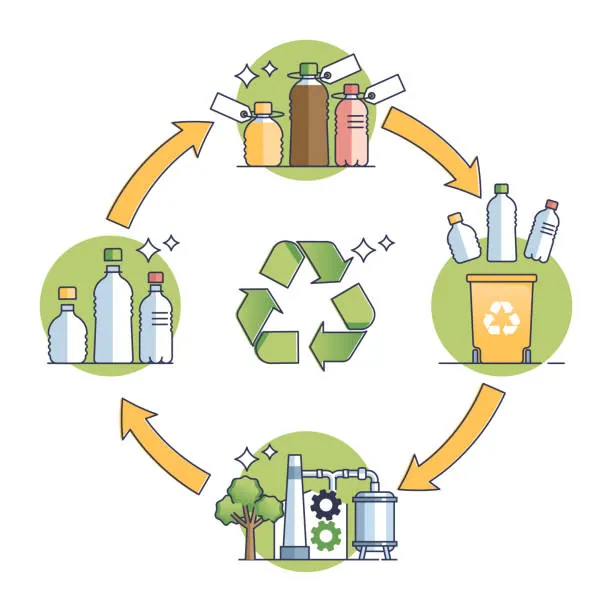
The phrase "closed-loop packaging" gets used a lot, but PET is one of the few materials that genuinely delivers it. Bottle-to-bottle recycling means exactly what it says: a used PET bottle becomes a new PET bottle, again and again. Here is how that loop actually works, and what it takes to keep it turning.
What "bottle-to-bottle" means
Most recycled plastic is downcycled — turned into a lower-value product (fibre, strapping, filler) that eventually leaves the loop for good. Bottle-to-bottle recycling is different: the recovered PET is cleaned to food-grade quality and made back into preforms and bottles. The material stays at the same high value, in the same application, potentially forever.
This is the difference between a straight line (make → use → discard) and a circle (make → use → recycle → make again).
How the loop works, step by step
- Consumption — a PET bottle is used and emptied.
- Collection — the bottle is collected through waste-collection systems rather than sent to landfill or littered. This is the step everything else depends on.
- Sorting — bottles are separated by polymer type and colour. Clear PET is the most valuable and versatile.
- Washing and flaking — bottles are shredded into flakes and thoroughly washed to strip labels, caps, adhesive and residue.
- Food-grade decontamination — the flakes undergo intensive super-cleaning to meet food-contact safety standards. This step is what makes the output safe for new bottles.
- Repelletising — clean flakes become rPET resin pellets.
- New preforms and bottles — the rPET is moulded into new preforms and blown into new bottles — and the loop begins again.
Why PET is uniquely suited to this
Not every material can do this. PET can because it:
- Cleans to food-grade quality. Its chemistry allows decontamination to food-contact standards — many plastics cannot make this claim.
- Reforms without losing essential properties. It can be melted and remoulded while keeping clarity and strength.
- Is easy to identify and sort. As resin #1, it is straightforward to separate in recycling streams.
Together, these traits make PET one of the best real-world examples of a circular material — a point often missed in the debate about whether PET is recyclable.
What the loop needs to keep turning
Bottle-to-bottle only works if a few things are in place:
- Effective collection. No collection, no loop. The biggest constraint is usually getting used bottles back, not the technology.
- Clean input. Contaminated or heavily mixed material lowers the quality of the output. Consumer sorting and good collection systems matter.
- Design for recyclability. Clear PET, compatible labels and closures, and avoiding hard-to-recycle additives all keep recovered material valuable.
- Demand for rPET. Brands specifying recycled content create the demand that funds collection and reprocessing. Buying rPET is what closes the loop financially.
Why it matters for brands
- Real sustainability, not just a claim. Bottle-to-bottle keeps material in use and reduces the need for virgin plastic — a substantive story, not greenwashing.
- Meeting recycled-content targets. Regulations and retailers increasingly expect recycled content; bottle-to-bottle rPET is how you supply it for food-grade products.
- Consumer trust. "This bottle can become another bottle" is a message shoppers understand and value.
Your role in the loop
As a brand or bottler, you influence the loop in two big ways:
- Specify recycled content. Using food-grade rPET in your preforms pulls material back into the circle.
- Design for recyclability. Choosing clear PET and compatible components means the bottles you sell today are easy to recycle tomorrow.
The bottom line
Bottle-to-bottle recycling is PET's circular economy in action: used bottles, cleaned to food-grade quality, becoming new bottles. The technology works — the limiting factor is collection and demand. Brands that specify recycled content and design for recyclability are what keep the loop spinning.
Want to build recycled content into your packaging? Talk to our team about rPET options, or explore our preform and bottle ranges.